Thank you for 10,000 followers! · Free recipe
Homemade Rye Flour Shampoo
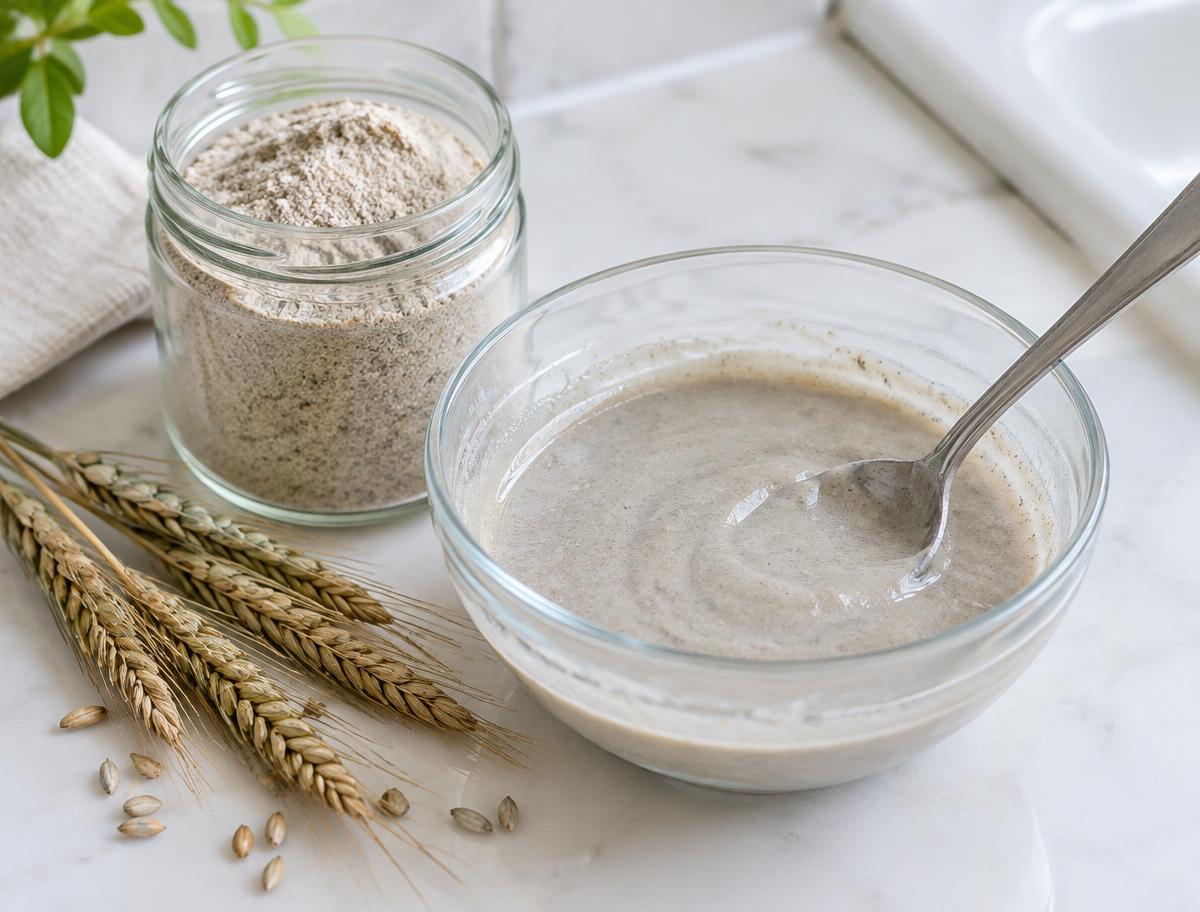
Thank you for 10,000 followers! Here is the rye flour hair wash from my latest video: just flour and water, with careful rinsing and safety tips.
Best for: People looking for a simple, fragrance-free hair wash who tolerate rye — results vary by hair and scalp
You need
- 2–3 tbsp finely milled rye flour (German Type 1150 or 1370, if available), ideally organic and without additives
- 200–250 ml lukewarm water (about ⅘–1 US cup)
- A bowl, spoon or whisk, and a fine sieve if your flour contains coarse bran
How to make it
- Sift out coarse bran if needed. Whisk the rye flour into the lukewarm water until smooth and lump-free. Let it stand for about 5 minutes; aim for a spreadable, pourable mixture.
- Gently detangle your hair, then wet it thoroughly with lukewarm water. Avoid hot water, which can make the flour mixture harder to rinse out.
- Apply in sections, focusing on the scalp. Massage gently with your fingertips for 2–3 minutes without scratching. It will not lather like conventional shampoo.
- Rinse very thoroughly with lukewarm water for at least 2–3 minutes, lifting sections of hair so water reaches the scalp. Keep rinsing until no flour remains; thick or curly hair may need longer.
- Use a conditioner you already tolerate on the lengths if needed. Make the mixture fresh for each wash and discard leftovers rather than storing the wet paste.
Keep your first batch plain
Start with flour and water only. Essential oils and vinegar are not necessary and can irritate a sensitive scalp. If rye feels drying or leaves residue, stop using it and choose a gentle cleanser you tolerate instead.
Why try a rye flour wash?
- Rye flour contains starch that can help absorb oil; massage and thorough rinsing help remove it. This traditional wash does not foam like shampoo, and it may not remove heavy oils or styling-product buildup well.
- A plain flour-and-water mixture avoids added fragrance, but natural does not automatically mean gentle or allergy-safe. Clinical evidence for homemade rye shampoo is limited; it is not a treatment for dandruff, eczema or hair loss.
- Some people report an adjustment period, while others find flour washes unsuitable. You do not need to push through itching, greasy buildup or discomfort, and no particular timeline or change in scalp oil production is guaranteed.
Safety first
- Use rye flour, not wheat or spelt flour: their dough-forming gluten can make a sticky mixture that is difficult to wash out. Coarse flour can leave particles trapped in the hair.
- Rye contains gluten. Avoid it with a known rye or cereal allergy; if you have celiac disease or another gluten-related condition, ask your clinician before use and avoid ingestion. Avoid breathing in flour dust.
- Patch test a small amount on intact skin and wait at least 24 hours before the first wash. A patch test cannot rule out every reaction. Stop and rinse immediately if burning, itching or redness occurs.
- Keep the mixture out of your eyes. If it enters your eyes, rinse well with clean water. Do not use on broken, infected, weeping or severely inflamed scalp skin without medical guidance.
- Make one fresh batch for immediate use, with clean utensils. This water-based mixture has no preservative; do not keep wet leftovers for a later wash.
- Do not pour leftover paste down the drain. Wipe it into household waste first and use a drain strainer to catch flour residue while rinsing. Clean slippery shower surfaces afterward.
- Persistent flakes, sores, significant itching or hair loss need medical assessment. This recipe is educational and is not a substitute for advice or treatment from a dermatologist or physician.
Research
- Dandruff: how to treat
American Academy of Dermatology — guidance for persistent dandruff, not evidence that rye flour treats it
Not medical advice
This content is for general educational purposes only and is not medical advice. It does not diagnose, treat, or cure any condition and does not create a doctor-patient relationship. For any skin or scalp concern, please consult a dermatologist or physician.
Read the full disclaimer