From my social video · Free recipe
Simple Coconut Oil Deodorant
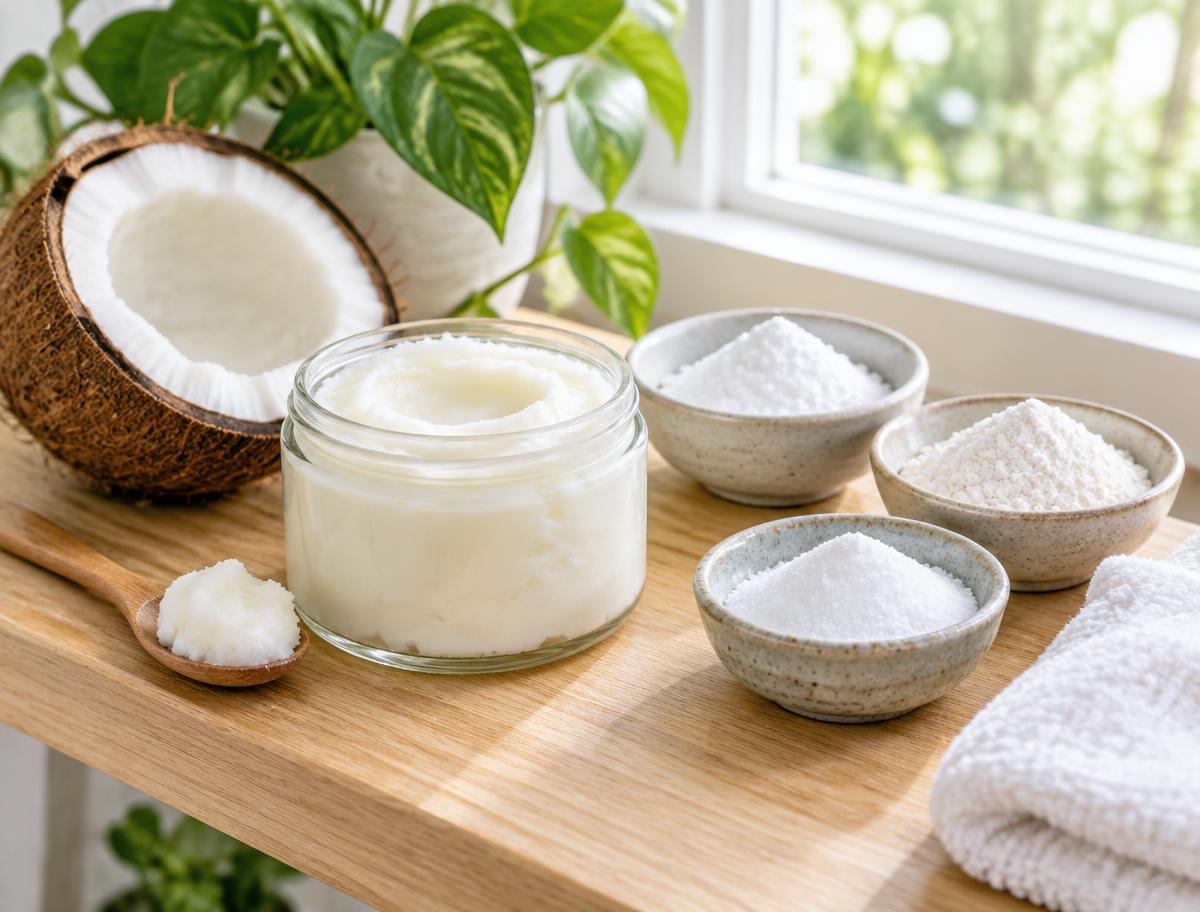
Four ingredients, a little jar and no aluminum: the simple version of my homemade deodorant, with essential oil if you want a scent.
Best for: Healthy, intact underarm skin that tolerates baking soda
You need
- 1 tbsp coconut oil
- 2 tbsp arrowroot powder
- ½ tsp baking soda
- ½ tsp non-nano zinc oxide
- Optional: 5–10 drops of essential oil
- A small clean jar
How to make it
- If your coconut oil is solid, warm it gently until soft.
- Stir in the arrowroot powder, baking soda and zinc oxide until smooth. Add the powders slowly and avoid breathing in the dust.
- Add the essential oil if you are using it, stir again and fill into the jar.
- Use clean, dry fingers to apply a small amount to clean, dry underarms.
- Coconut oil melts in warm rooms. If it gets soft, stir it and keep it somewhere cooler.
How this recipe came about
I developed this recipe over many years. It started with nothing but baking soda and water. Then came the coconut oil, and it kept growing from there. Along the way I also bought and tried natural deodorants from the store, and bit by bit I built my own recipe.
Why it works — and what it doesn't do
- This is a deodorant, not an antiperspirant: it is intended to help manage odor, but it does not stop sweating. The American Academy of Dermatology explains that deodorants do not reduce sweating.
- The American Academy of Dermatology lists arrowroot among ingredients used in deodorants to absorb sweat and feel smooth. That does not establish how well this particular homemade mixture works; no clinical study of this exact recipe is provided here.
Safety first
- Baking soda can irritate underarm skin. Patch test first, and stop if you notice redness, burning or itching.
- Do not apply to freshly shaved, broken or irritated skin.
- Essential oils are optional. Leave them out for sensitive skin, and for children or during pregnancy ask your doctor first.
- Keep water out of the jar and use clean fingers.
Not medical advice
This content is for general educational purposes only and is not medical advice. It does not diagnose, treat, or cure any condition and does not create a doctor-patient relationship. For any skin or scalp concern, please consult a dermatologist or physician.
Read the full disclaimer